
February 26, 2026

Yasin Bayram
Construction Expert with 30 years of experience
Kermit SPC Skirting Advantages: 8 Models, 60-140 mm (2026)
Flexible gasket edges, waterproof, impact-resistant SPC profiles in 8 models (60-140 mm): how Kermit skirting cuts silicone work and speeds up clean finishes.
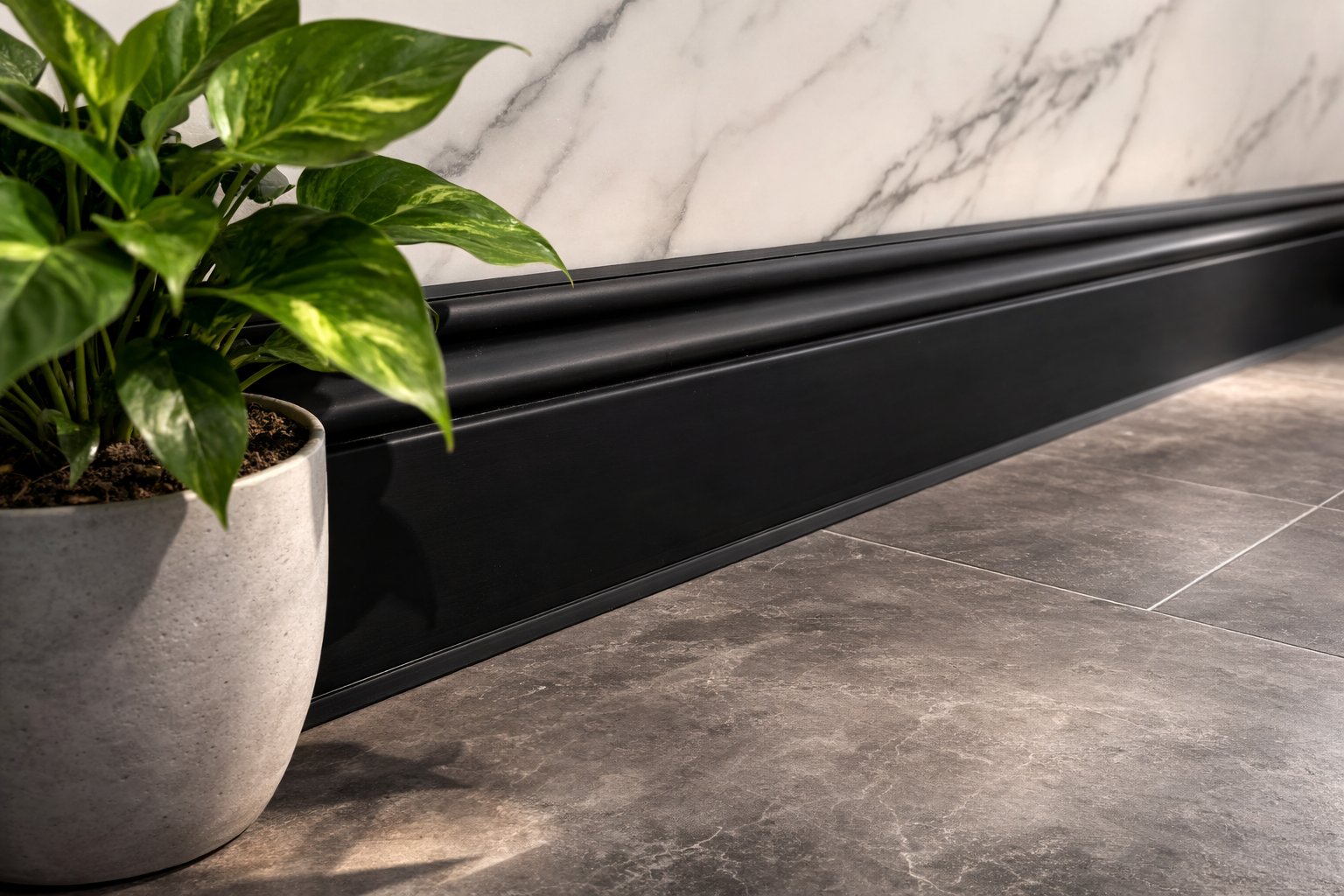
What makes Kermit SPC skirting different in real projects? The practical answer:
The difference is not only the profile shape. It is the finish quality at the wall-floor line, the flexible-edge gasket detail, and a skirting system — 8 models from 60 to 140 mm — designed for real project conditions.
In real jobs, the “difference” is usually seen in:
- how clean the wall-floor line looks after installation
- how much corrective silicone work is needed
- how the surface behaves in cleaning and daily impact
- how consistent the color/finish remains over time
- how quickly installers can complete details and hand over the project
Together, these technical and commercial differentiators create a practical selection framework for dealers, installers, architects, and project buyers.
1. The biggest visible difference: flexible top and bottom gasket edges
One of the strongest differentiators in Kermit SPC skirting positioning is the flexible edge / gasket detail (top and bottom edge contact).
Why this matters:
- walls are rarely perfectly straight
- floors are rarely perfectly level along the whole run
- small irregularities create visible gaps after skirting installation
- many installers correct those gaps with a separate silicone bead
Kermit already highlights Flexible Edges in its skirting feature set, and Turkish marketing copy also frames this as a solution that can reduce the need for mastik/silicone finishing in the joint.
In practical terms, this means the profile is designed to:
- sit more cleanly against imperfect walls
- improve the visual contact line at the floor edge
- reduce the appearance of shadow gaps
- lower silicone dependency in many standard installations

2. Difference vs many generic skirtings: less dependency on post-install silicone correction
This is a real field observation:
In many skirting systems, visible wall gaps are corrected with silicone after mounting.
That is why a flexible edge skirting board is not just a cosmetic talking point. It changes the finishing workflow.
Kermit SPC skirting is positioned to reduce or eliminate the need for a visible silicone line in many standard installations by helping cover gaps caused by wall/floor unevenness.
Kermit is the skirting solution that best compensates for errors in the key quality-defining factors below during skirting installation:
- wall condition
- floor flatness
- cut quality
- alignment
- corner detailing
That credibility matters in B2B decisions.
3. Surface and color layer: why users care about “scratch appearance” and finish continuity
Another major differentiator is the surface/color layer behavior.
In project conversations, buyers often ask not only “Does it scratch?” but:
- If it gets marked, does the color appearance change visibly?
- Does it need touch-up/repair work?
- Will the finish look tired quickly in high-use areas?
Kermit SPC skirting does not use a paint or foil surface color layer; it has an integral/original color layer. This is why scratching does not create the same visible color-change contrast seen in painted or foil-covered surfaces, and why the profile offers high scratch resistance with stronger color continuity.
This matters especially in high-use interiors, because the skirting keeps a cleaner and more consistent appearance for longer while reducing repair/touch-up needs.
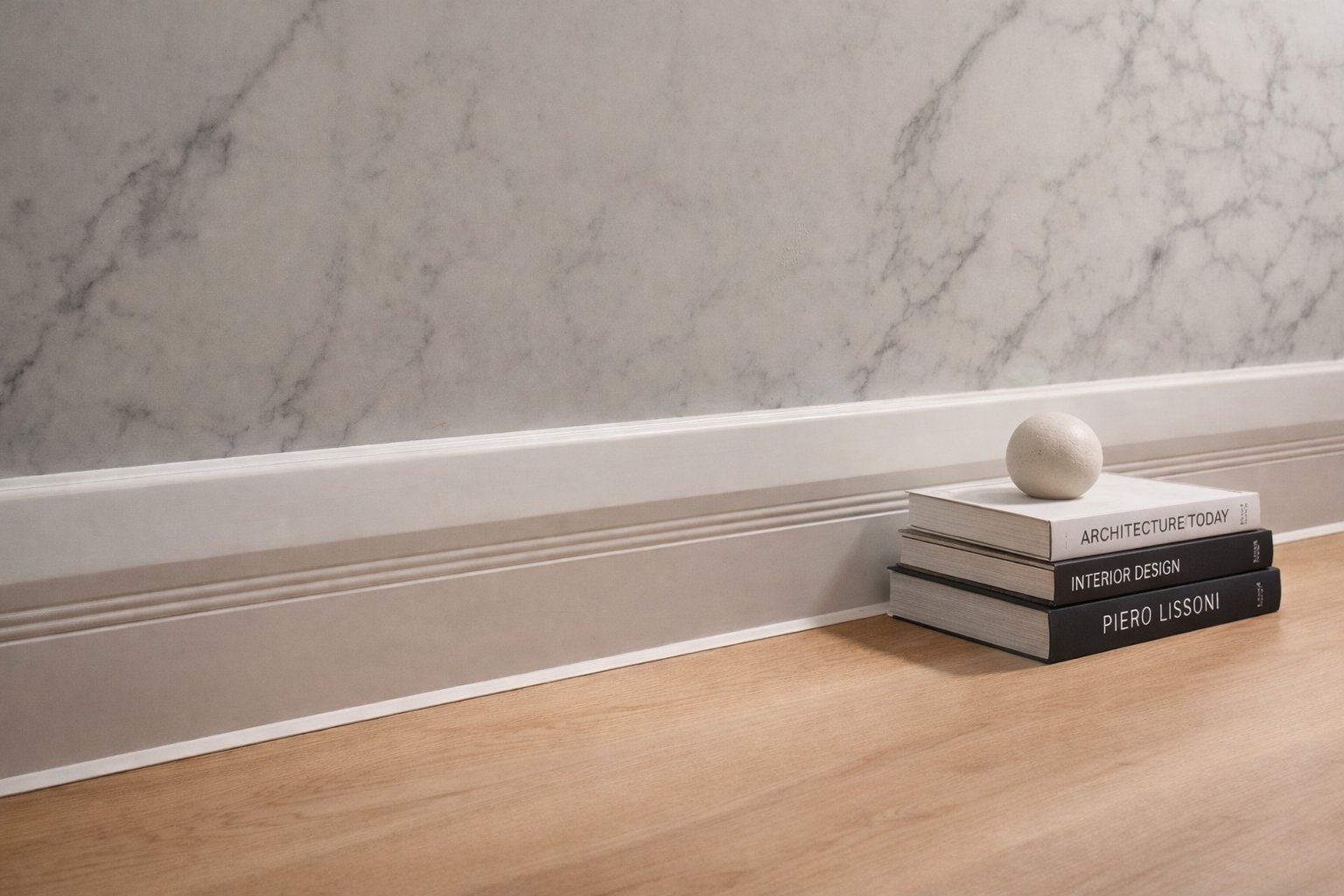
4. Rigidity and profile feel: what “aluminum-like hardness” means on site
The strong phrase “SPC skirting is aluminum hardness” is used to describe the rigid, solid profile feel of Kermit SPC skirting in real installations.
Kermit SPC skirting shows this difference clearly on site:
- it keeps a clean, straight installed line
- it stays rigid and stable after installation
- it maintains form and appearance in daily use
This is why Kermit is a reliable skirting solution especially in long runs and in spaces with frequent cleaning and impact traffic.
5. Water and moisture resistance: a major advantage for real maintenance conditions
Kermit’s skirting feature set includes Water Proof positioning, and this aligns with one of the most important reasons SPC skirting is selected in the first place.
In practical project use, waterproof skirting board searches usually come from spaces where teams care about:
- wet cleaning routines
- humidity variation
- frequent mopping
- long-term finish reliability
- less anxiety around moisture-sensitive materials
This advantage is often expressed with strong language (for example, “100% unaffected by water/moisture”).
Kermit SPC skirting is positioned as a moisture-tolerant, water-resistant/waterproof skirting solution for interior maintenance-heavy environments.
The benefit is clear, but installation quality and detailing still matter.
6. Cleaning performance and hotel operations: where the difference becomes operational
Hotel cleaning teams are a very strong use-case lens for this topic.
Why hotels and similar projects care about skirting quality:
- housekeeping works fast
- edges are cleaned frequently
- visual wear shows quickly in long corridors
- maintenance teams need surfaces that are easy to wipe and keep presentable
Several operational benefits stand out here:
- can be wiped with a damp/wet cloth
- maintains appearance during repeated cleaning
- moisture does not quickly degrade the profile
- long-term service life expectation in maintenance-heavy areas
This is exactly why skirting for hotels is a useful keyword. The skirting decision is not just about decoration; it affects:
- cleaning speed
- finish consistency
- maintenance perception during guest experience
Kermit SPC skirting brings these operational needs together in one system: wipeable surface behavior, moisture tolerance, impact resistance, and cleaner long-run finish lines. That is why it offers not only an aesthetic upgrade, but also a workflow advantage in hotels and other maintenance-heavy projects.
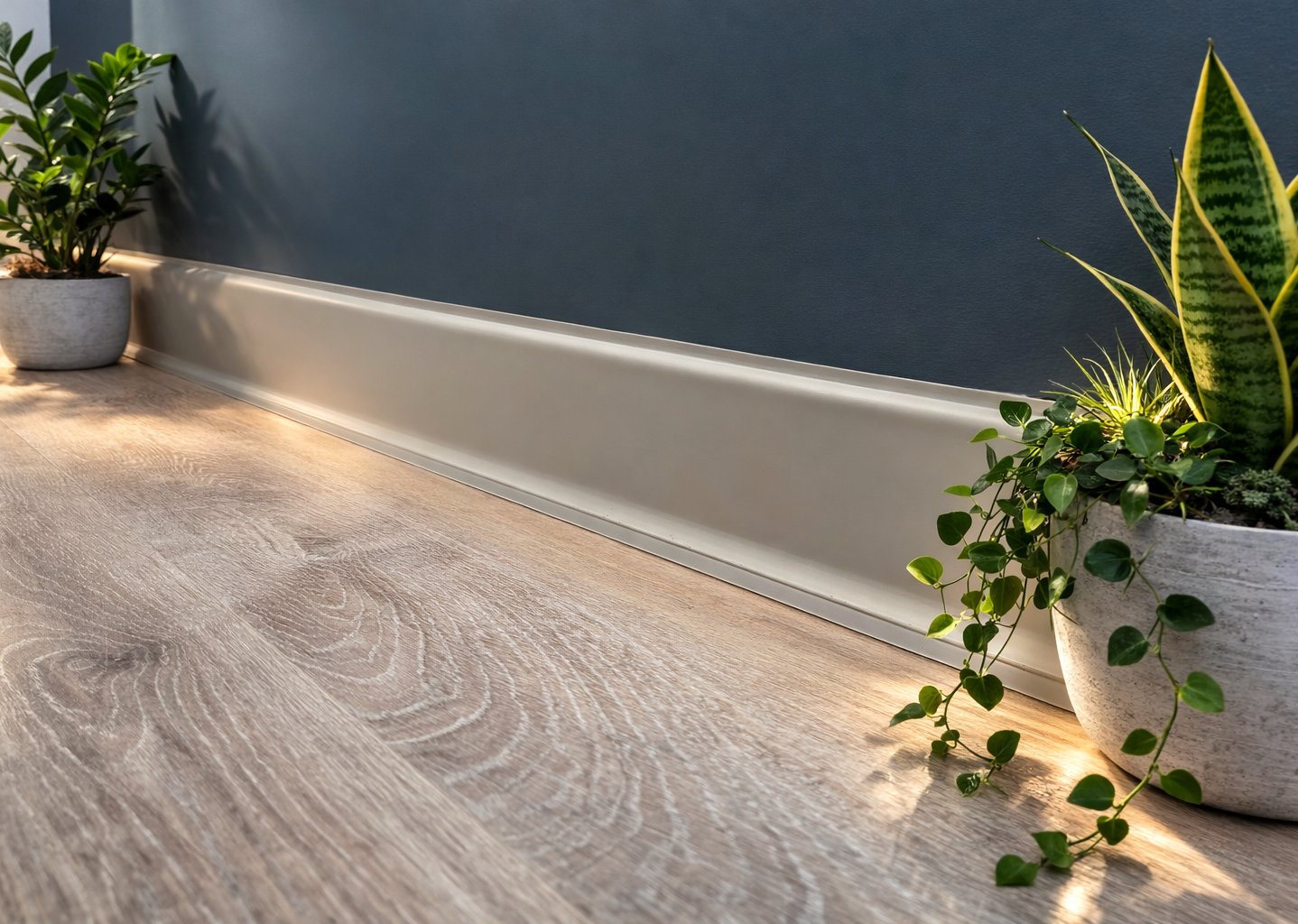
7. Impact resistance and color continuity in daily use (vacuum, carts, routine contact)
Kermit’s skirting feature set also highlights Impact Resistant, and this matters most in real user behavior such as:
- vacuum cleaner contact
- routine housekeeping bumps
- daily movement near walls
- furniture repositioning
What buyers care about here is not only “does it dent” but:
- does the finish show a contrasting damage line?
- does the visual quality collapse after repeated contact?
- does the installed edge still look premium after months of use?
Kermit SPC skirting is positioned for impact-prone everyday interiors with a focus on both durability and visual continuity.
For projects with high cleaning intensity (hotels, offices, retail), this is a meaningful selection criterion.
8. Hygiene and anti-bacterial positioning: useful, but specify it correctly
Kermit’s skirting feature stack includes an Anti-Bacterial label. This is a meaningful advantage in sectors where cleaning performance and hygiene perception directly affect user confidence.
In practice, this supports Kermit’s maintenance-friendly surface positioning and strengthens the overall “clean, controlled, reliable” feel of the finished space. It should be considered as a product advantage alongside regular cleaning routines, with current technical documentation reviewed for project-specific requirements.
9. Cutting, workmanship, and installation flexibility: what to ask before specifying
Several installer-focused differentiators also matter here:
- cleaner saw-cut behavior (no burn/darkening)
- suitability for 45-degree cuts
- color-matched accessory part solutions
- support for problem-solving installation details
- special workmanship for curved/oval applications
These are excellent difference-defining questions, because they move the conversation from “price-only skirting” to “installation-ready system.”
Kermit SPC skirting stands out positively in these areas:
- The profile supports clean saw cuts without burn or darkening marks.
- It is well suited to 45-degree detail workmanship, giving installers more corner/joint finishing flexibility.
- Color-matched accessory/part solutions help simplify installation and solve detail issues on site.
- For special applications (including curved/oval work), Kermit offers a professional solution-oriented workmanship approach.
- With the correct installation method for the selected model, Kermit supports a faster, cleaner, and more controlled installation process.
This is where project teams see the real difference between a generic skirting product and a project-ready skirting system.
10. Model variety, style range, and color availability: another practical Kermit advantage
Kermit’s product range already shows multiple skirting profiles and heights (Alpha, Berlin, Elite, Moderna, Optima 60, Optima 90, Solid, X-Line), which supports a modern/classic model variety positioning and alternatives for different budgets/styles.
This matters because “the best skirting” is not one profile for every job. Projects need different outcomes:
- slim vs bold visual line
- modern vs classic profile character
- residential vs commercial feel
- speed-focused standard selections vs custom-looking presentation
Kermit also markets a system-based approach (flooring + skirting + wall panels), including matching color direction benefits. That helps buyers avoid a fragmented finish where each product line looks like it came from a different project.
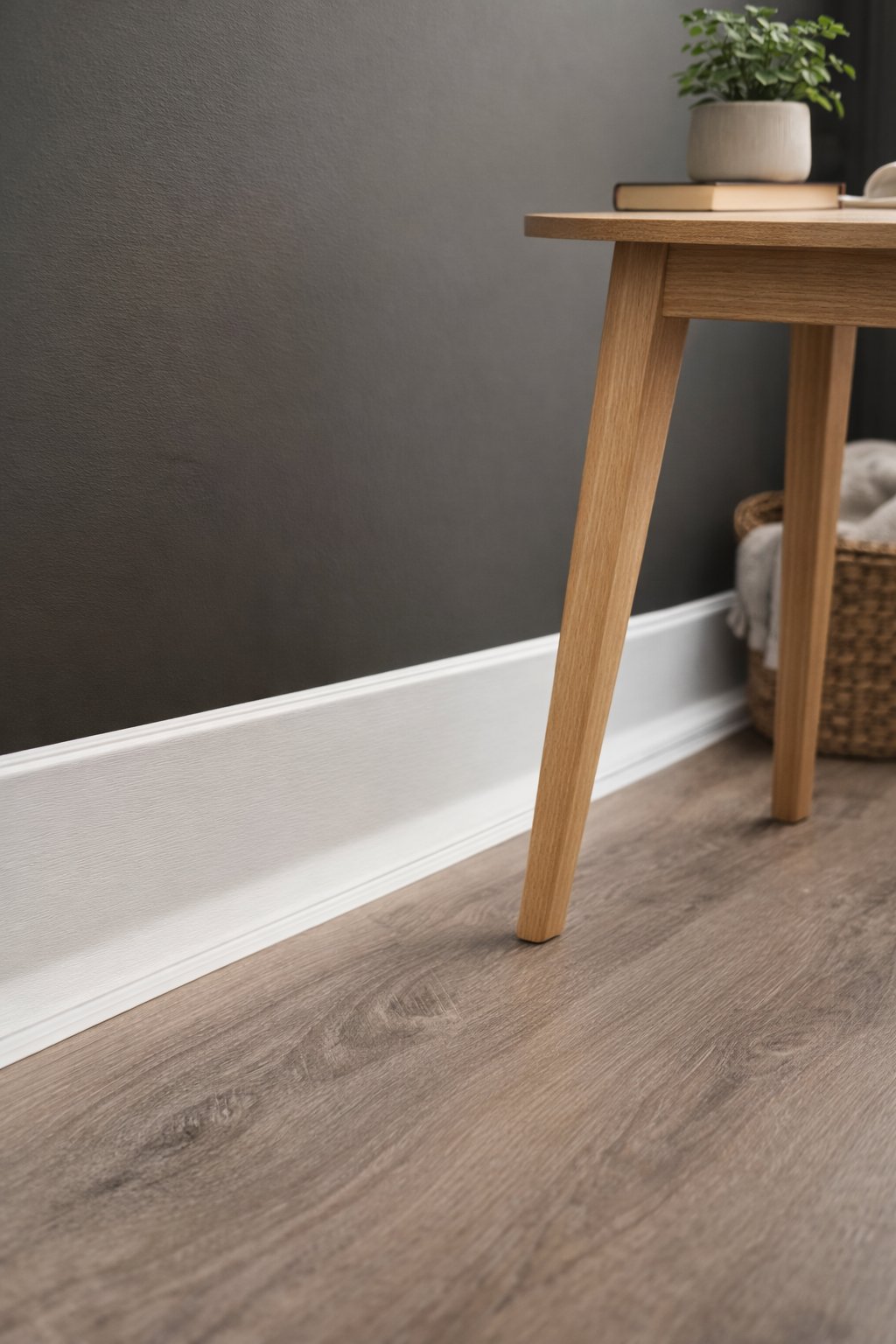
11. Site protection, production speed, and commercial readiness: why buyers mention these in the same conversation
This comparison also includes operational/commercial points:
- standard color selection readiness
- fast response to project demand
- quality + speed positioning in production
- budget range diversity
- surface protection band / protective film for site-stage handling
These are exactly the kinds of details that matter in real tenders and project deliveries, even if they are often ignored in generic product descriptions.
These points show that Kermit is not positioned only as a product supplier, but as a project-oriented skirting partner that combines profile variety with practical installation and delivery support.
Then, during specification/procurement, confirm:
- current lead time
- stockable colors
- accessory availability
- model-specific commercial conditions
12. What makes Kermit SPC skirting different, in one sentence
In one practical B2B sentence, the difference can be summarized as:
Kermit SPC skirting stands out by combining flexible-edge finishing (for cleaner wall-floor lines), durability-focused feature positioning (waterproof/impact-resistant/anti-bacterial), and project-useful profile/system variety for faster, cleaner installations.
In practice, the difference appears:
- on the wall-floor joint
- in housekeeping/maintenance cycles
- in installation workflow
- in long-run finish quality
- in project planning and model selection
Final takeaway
So, what are the Kermit SPC skirting advantages?
The key difference is a finish-quality-first skirting approach:
- Flexible edge/gasket detailing for cleaner wall-floor lines
- Moisture-tolerant, maintenance-friendly positioning
- Impact-resistant feature set for daily-use interiors
- Multiple profiles/models for different project styles
- System thinking (matching with flooring/walls) instead of stand-alone accessory thinking
If you are comparing models for a project, start with the Resources section, then shortlist profiles and contact us for the right model/accessory combination based on the installation conditions and finish expectations.