
February 26, 2026

Yasin Bayram
Construction Expert with 30 years of experience
What Is Skirting with Flexible Edges? A Practical Guide to Cleaner Wall-to-Floor Finishes
Learn what skirting with flexible edges means, how it helps cover gaps caused by uneven walls and floors, and why it can reduce the need for visible silicone finishing lines in many installations.
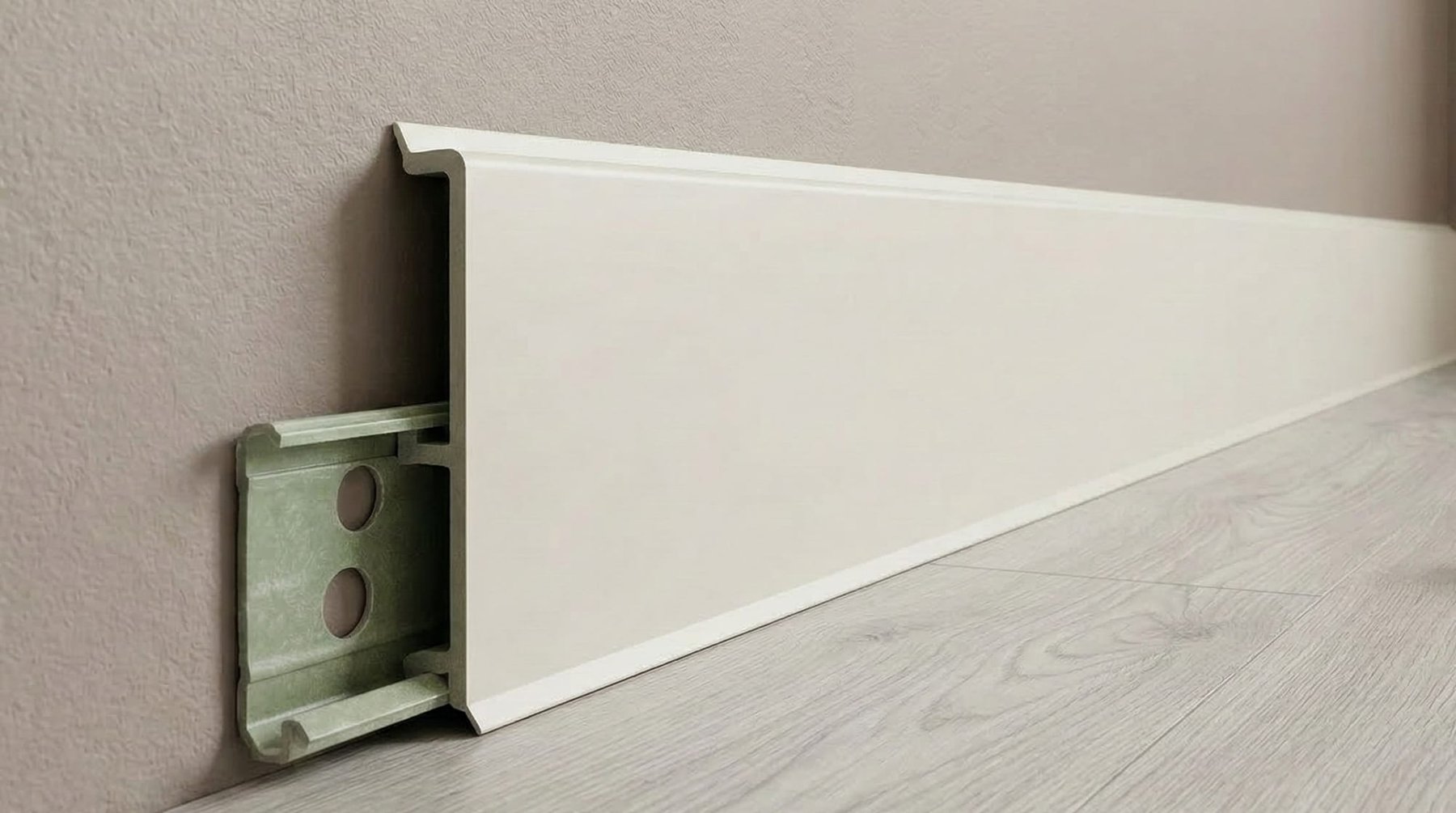
If you are asking what is skirting with flexible edges, the short answer is:
It is a skirting profile designed with flexible top and bottom edge zones (gasket-style edges) that help cover small gaps caused by wall and floor unevenness after installation.
This matters because in real projects, the final look of the skirting line is often where workmanship is judged first.
Many installers know this problem well:
- the wall is not perfectly straight
- the floor line is not perfectly even
- small gaps appear after mounting the skirting
- a visible silicone bead is used to hide or fill the gap
That is exactly the situation where Skirting with Flexible Edges becomes useful.
Why this topic matters in real projects
On paper, skirting installation sounds simple: cut, mount, finish. In practice, the final wall-to-floor line is affected by:
- plaster irregularities
- paint thickness differences
- wall waviness
- floor level variation
- old renovation surfaces
- minor installation tolerances
So even when the skirting itself is high quality, the site conditions can create visible gaps.
This is why many installers, regardless of the skirting material or country of origin, still use silicone/mastic finishing after mounting. It is often a practical fix for an imperfect surface, not necessarily a problem with the skirting profile itself.
What does “Flexible Edges” mean on a skirting board?
For Kermit Floor content, the preferred terminology is:
- TR: Contalı Süpürgelik
- EN: Skirting with Flexible Edges
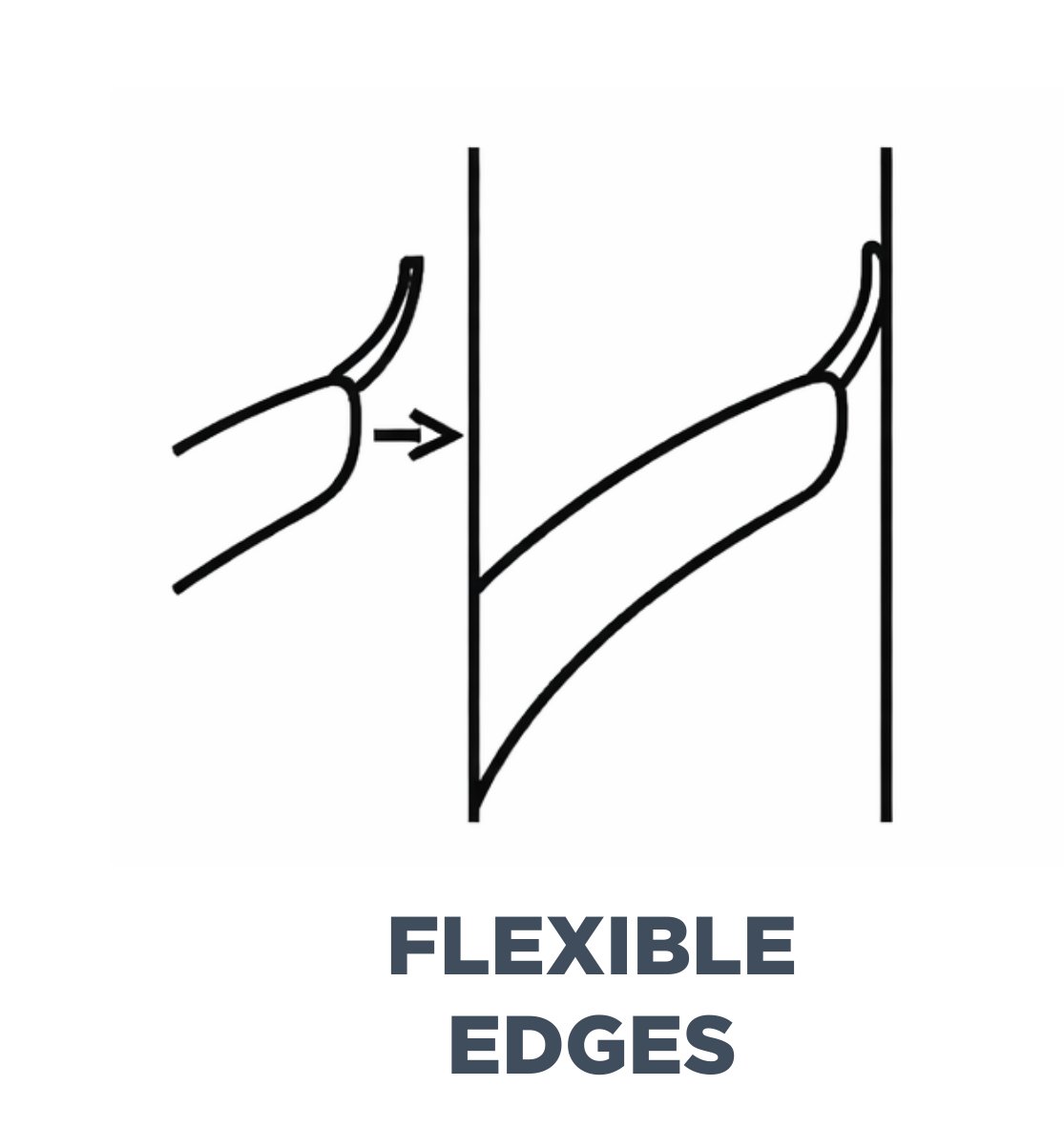
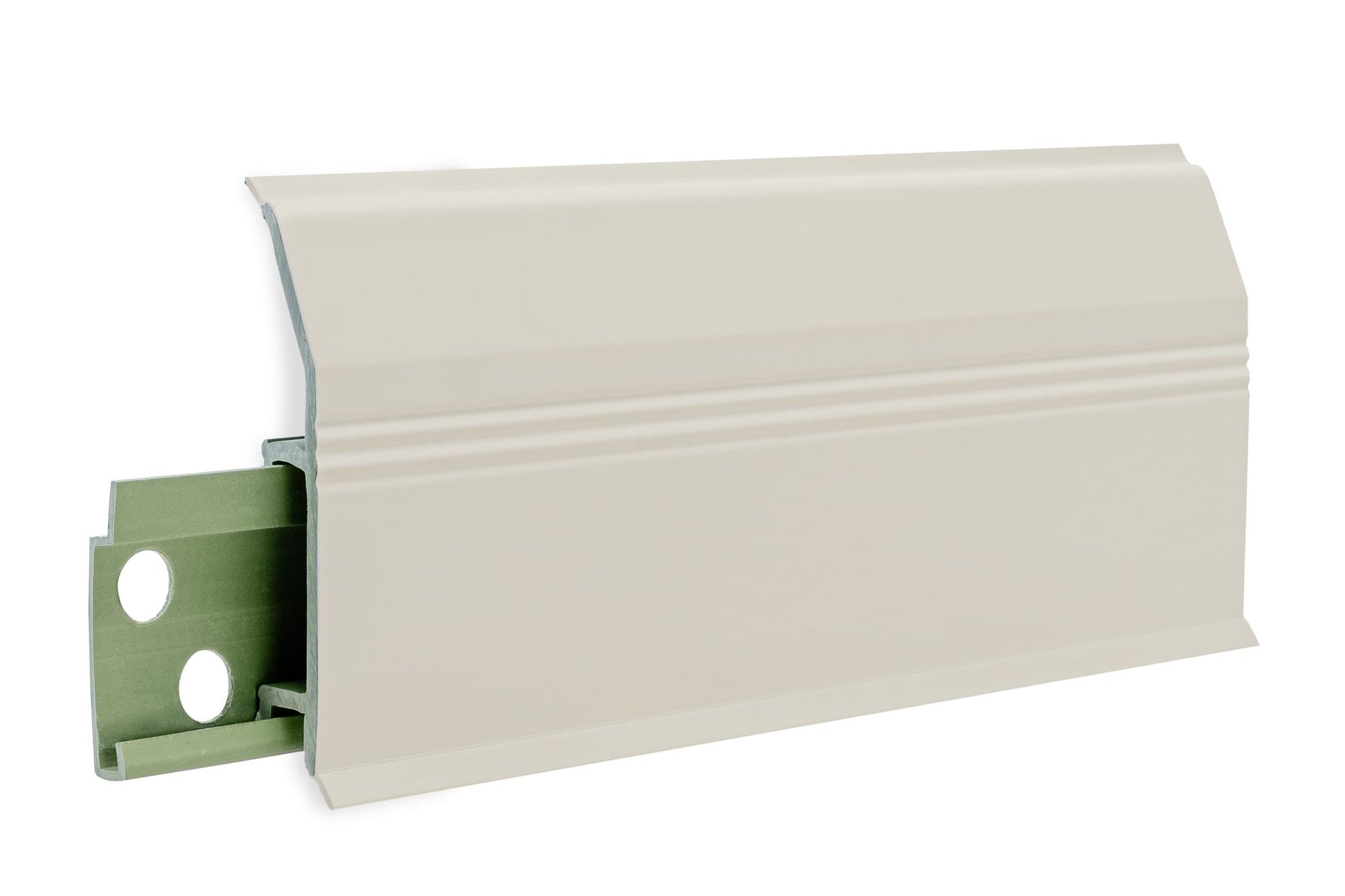
In practical installation language, this refers to a skirting profile that includes flexible edge contact points (gasket-like edge details) so the profile can sit more cleanly against real-world surfaces.
Instead of relying only on a rigid edge line, the flexible edge helps absorb or visually close small irregularities along:
- the upper edge (wall side)
- the lower edge (floor side)
This does not mean a product can solve every substrate problem. It means the detail is designed to improve the finish quality in normal project conditions where surfaces are not perfectly flat.
The main problem it solves: gaps after installation
The biggest reason people search for terms like flexible edge skirting board, skirting board with gasket, or gap covering skirting is simple:
They want a clean finish without visible gap lines.
When a rigid skirting profile is mounted on an uneven wall, you may see:
- shadow lines
- open joints at the wall edge
- inconsistent contact along the floor edge
- extra silicone work to create a presentable finish
With a flexible-edge detail, the skirting is better positioned to adapt to minor irregularities and create a tighter-looking line.
Why many installers use silicone after skirting installation
This is an important real-world point, and it reflects real site practice.
In many projects, after skirting is mounted, installers apply a silicone bead at the wall-floor junction to:
- fill visible gaps
- improve visual continuity
- reduce dust accumulation in open lines
- make the handover look cleaner
That finishing step can work, but it also creates tradeoffs:
- extra labor time
- extra material step
- variable visual quality depending on application skill
- maintenance/aging appearance of exposed silicone lines
This is why the idea of no silicone skirting finish (or at least reduced silicone dependency) gets attention from installers and buyers.
How Kermit Floor SPC skirting is positioned in this context
Kermit Floor already highlights Flexible Edges as a core skirting feature in the product experience and marketing language. In Turkish messaging, the brand also explicitly positions the flexible-edge gasket concept as a way to avoid visible mastik/silicone finishing in the wall-floor joint.
In practical terms, the benefit can be described like this:
- the flexible edge detail helps follow surface irregularities
- small finish gaps are better covered visually
- the need for a separate silicone line may be reduced in many installations
This is exactly why Contalı Süpürgelik / Skirting with Flexible Edges is not only a design term, but also a site-efficiency and finish-quality term.
What “no silicone” means in practice
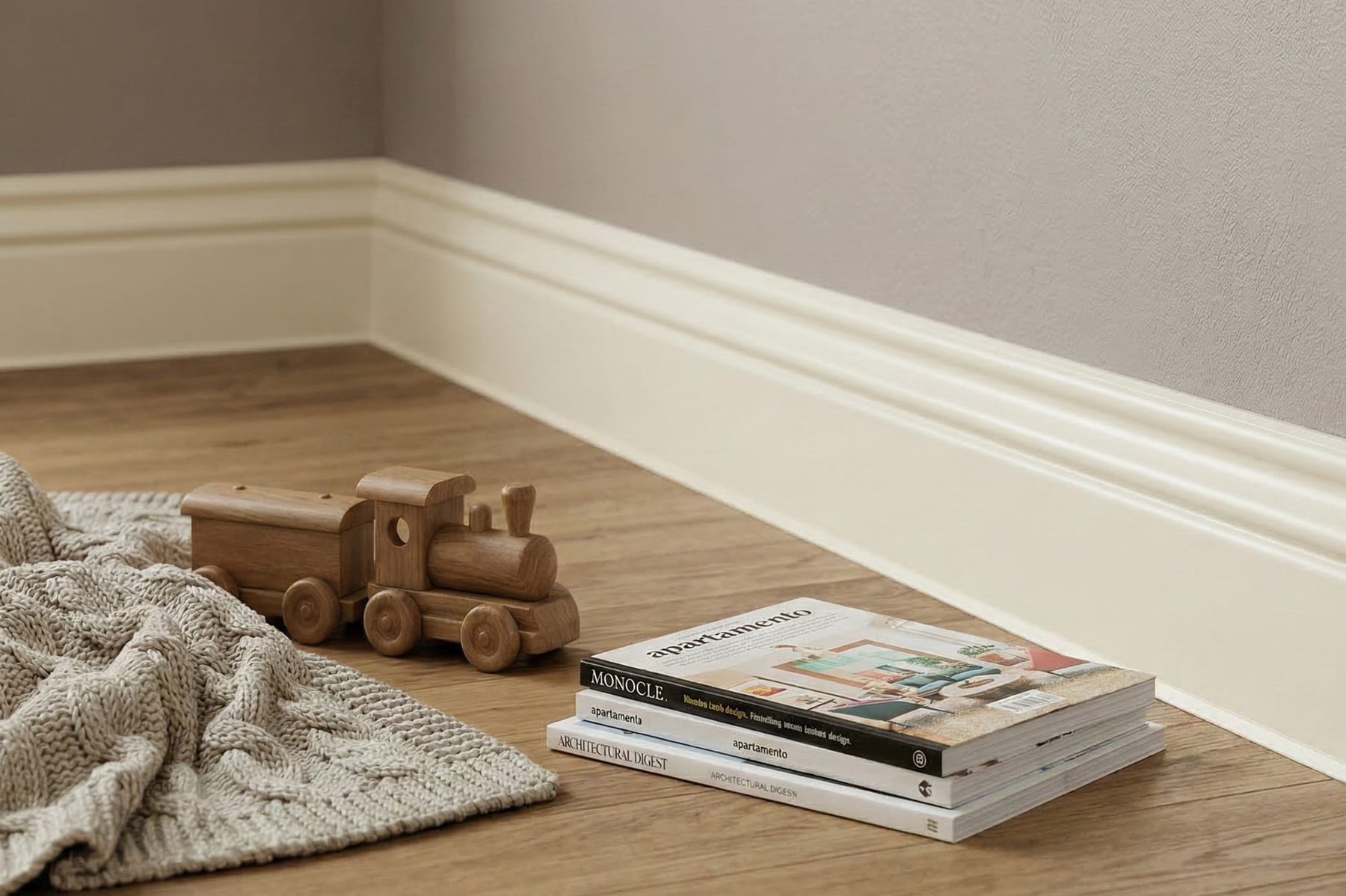
The phrase no silicone skirting finish should be understood as a practical installation goal, not an absolute guarantee for every wall and floor condition.
In practical terms:
Skirting with Flexible Edges is designed to reduce or eliminate the need for a visible silicone bead in many standard installations by helping the profile cover small gaps caused by unevenness.
Real outcomes still depend on:
- wall condition
- floor flatness
- installation quality
- corner detailing
- cut accuracy
- project tolerances
That distinction keeps the benefit tied to real site conditions.
Where Skirting with Flexible Edges adds the most value
Flexible-edge skirting can be useful in many interiors, but it becomes especially valuable when the project has finishing sensitivity or imperfect surfaces.
1. Renovation projects
Renovation sites are rarely perfect. Existing walls and floors often have:
- patched areas
- slight misalignments
- old finishes under new layers
- small line inconsistencies that become visible after skirting installation
In these projects, a flexible-edge detail can help deliver a cleaner finish faster.
2. Long corridors and continuous line-of-sight areas
In hotels, offices, showrooms, and residential corridors, skirting lines are visually long. Small imperfections become more noticeable across distance.
A cleaner upper and lower edge line improves:
- visual continuity
- perceived workmanship quality
- final handover impression
3. Commercial interiors with frequent cleaning
In commercial spaces, the finish detail at the wall-floor junction is not only visual. It also affects maintenance perception.
When gaps are visibly open, dirt and dust lines are easier to notice. A more consistent edge contact helps the space look better maintained.
Flexible edge skirting vs standard rigid-edge skirting
This is not a “one is always good, one is always bad” comparison. The correct comparison is about site conditions and finishing expectations.
Standard rigid-edge skirting can work well when:
- walls are straight
- floors are even
- installation quality is high
- a silicone finishing step is acceptable
Skirting with Flexible Edges is often preferred when:
- you want a cleaner finish with less visible gap correction
- walls/floors have minor irregularities
- finish speed matters
- handover quality is closely inspected
- you want to reduce dependency on a separate silicone bead step
Does flexible-edge skirting replace good installation practice?
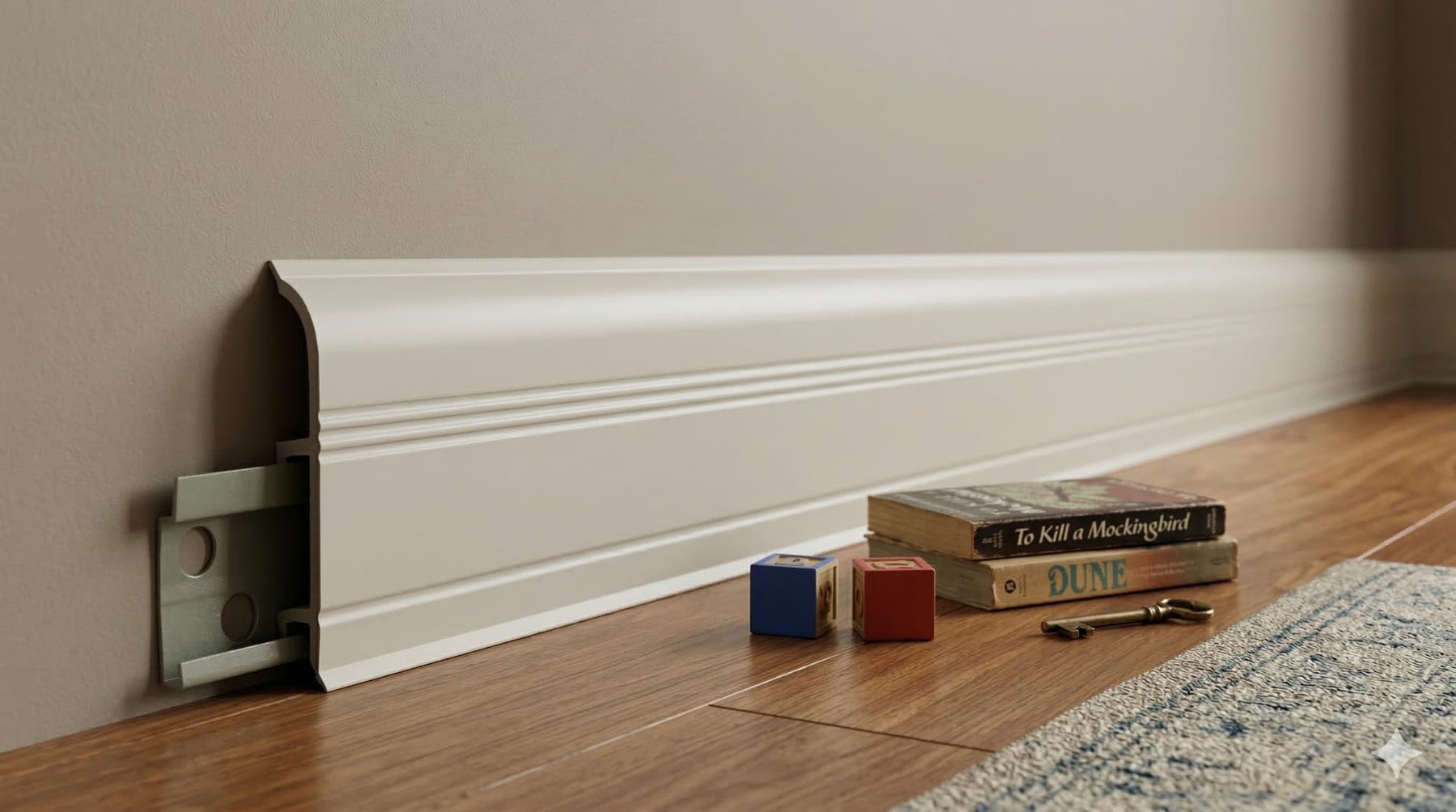
No. It improves the finishing detail, but it does not replace installation discipline.
Even with a flexible-edge skirting profile, installers still need to manage:
- accurate cuts
- proper mounting alignment
- clean joints
- corner transitions
- appropriate substrate preparation
The strongest results come from combining:
- a well-designed profile
- proper installation
- realistic expectations about site conditions
What to ask before specifying a flexible-edge skirting system
If you are a dealer, installer, architect, or project buyer, these questions help you qualify the right product:
- Does the skirting have top and bottom flexible edge details, or only one contact point?
- Is the flexible edge integrated into the profile design or added as a separate strip?
- How does it behave in long runs where wall waviness is common?
- What is the recommended installation method for maintaining edge contact quality?
- Which skirting profiles and heights are available for the project style?
- Are matching floor/wall color directions available in the same system?
These questions move the conversation from a generic “skirting accessory” mindset to a proper finishing-system mindset.
Why this detail is more than a cosmetic feature
Flexible edges may look like a small detail in a brochure, but on site they affect:
- labor steps
- finish consistency
- installation speed
- perceived quality at handover
- visual cleanliness over time
That is why Contalı Süpürgelik / Skirting with Flexible Edges is a meaningful spec topic, not just a marketing label.
Final takeaway
So, what is skirting with flexible edges?
It is a skirting solution designed to help create a cleaner wall-to-floor finish by covering small gaps caused by wall and floor unevenness, often reducing the need for a visible silicone finishing line.
For teams that care about finish quality, installation efficiency, and cleaner handover lines, this detail can make a real difference.
If you want to compare skirting models and documentation, review our Resources section and then contact us for model guidance based on your project type.