
September 22, 2026

Yasin Bayram
Construction Expert with 30 years of experience
SPC Flooring Underlay: Backing, Acoustics and What to Specify
Check attached backing, separate underlay, acoustic evidence and heating compatibility before specifying a Kermit SPC flooring assembly.
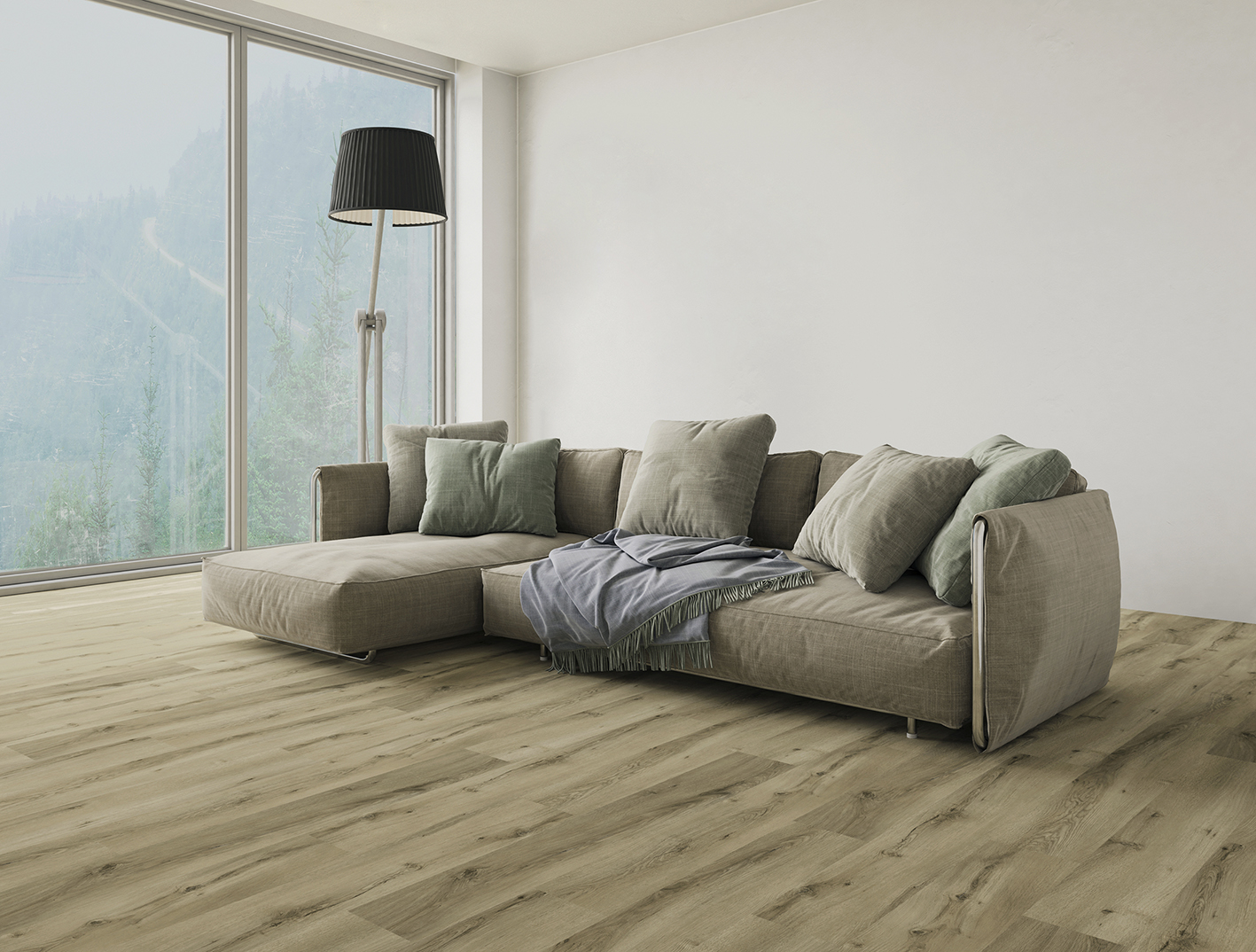
SPC flooring does not have one universal underlay requirement. First identify the exact plank, whether it has attached backing, the prepared base and the room's needs. Then confirm the approved assembly before installation. A roll labelled “for SPC” or a softer feel underfoot is not enough to establish compatibility.
Kermit's installation and care manual, in English requires underlay to suit the flooring, acoustic needs, traffic, heating and base. This guide helps architects, dealers and installers turn those checks into a clear specification.
Start with the backing on the ordered product
Attached backing is supplied as part of the plank. Separate underlay is another product laid beneath the flooring. Record both explicitly; the words “SPC” and “6 mm” do not identify every layer.
For example, Kermit's published 6 mm technical sheet, in Romanian describes a configuration with no attached IXPE. Its acoustic performance is undeclared. Results for a different, backed variant must not be transferred to this configuration. Other collection options may include backing; confirm the actual order rather than assuming the whole range has the same construction.
Use a product description such as “collection, decor code, nominal thickness, wear layer, attached backing: present/absent, separate underlay: specified product or none as approved”. Keep the approved technical sheet with that description. The thickness and wear-layer guide explains why total thickness, core, wear layer and backing need separate fields.
Does a backed plank need another underlay?
Do not add a second layer automatically. Ask Kermit to confirm the proposed combination, including the backing already on the plank. Likewise, a plank without attached backing is not an instruction to choose any available foam or to install directly on any base.
The useful question is: “Is this exact floor-and-underlay combination approved for this prepared base and room?” Supply the underlay's manufacturer, model, thickness and technical sheet. Include the traffic, furniture and heating conditions. An installer should be able to identify the approved product on site without interpreting a vague note such as “acoustic foam”.
The MMFA underlay guidance also treats the floor and underlay as a combined system selected for its application. Its general guidance complements product instructions; it does not approve a particular Kermit combination.
Keep acoustic questions specific
There are two different listening situations. Impact sound concerns noise reaching a room below or beside the floor; walking sound concerns noise heard within the room itself. The MMFA technical bulletin, section 4.3 distinguishes these and requires the flooring and underlay to be tested together. A result cannot be assembled by simply combining figures for separate products.
Before comparing quotations, write down the project question: footsteps reaching the apartment below, sound within an office, or a specified building requirement. Ask the project acoustician which evidence answers that question. A sample walked on in a showroom is useful for a personal impression, but it does not establish the installed building's performance.
Request the report behind a numerical claim, not just the number on a brochure. Check:
- The named flooring, thickness and backing in the tested assembly.
- The separate underlay, if used, and the supporting construction.
- The test method, reported measure and report identifier.
- Whether the report covers the product being quoted and addresses the project's requirement.
Leave an unverified acoustic value marked “to be confirmed”. For the documented Kermit 6 mm no-IXPE configuration, keep “undeclared” until applicable evidence is supplied. This is more useful to a specifier than an attractive number belonging to a different assembly.
Underlay does not replace a prepared base
Kermit's manual requires a flat, smooth, firm, clean and dry base. It specifies flatness within 2 mm over 1 m and calls for substrate-appropriate moisture checks. Underlay is not a way to accept a base that fails those requirements.
Inspect the base before ordering the final assembly. Identify high spots, low areas, loose material and the substrate type. Record the preparation needed and who will confirm it is complete. If the existing floor or screed is unsuitable, choosing a thicker underlay does not close that issue.
Moisture protection is another decision. The manual calls for an effective damp-proof membrane where concrete or stone is in contact with the ground, following local requirements. Do not assume that attached IXPE, a separate cushion or a general “water-resistant” label meets that requirement. Have the installer confirm the moisture-control arrangement for the actual construction.
Check heating and finished height together
Where underfloor heating is present, ask for the relevant thermal information for the full proposed floor-and-underlay assembly. Keep the Kermit 27°C maximum finished floor-surface temperature in the project instructions. The heating and sunlight guide covers controls, start-up and local hot spots.
Also measure the finished height at doors, neighbouring finishes and transitions. Include preparation layers and any approved separate underlay. A small product substitution can change those details, so confirm the assembly before door or profile decisions are finalised.
A short underlay approval record
Use this table in the order or installation file. Ask the responsible supplier or installer to resolve open items before fitting starts.
| Record | Information to keep |
|---|---|
| Flooring | Collection, decor code, thickness, wear layer and backing |
| Underlay | Exact product, thickness, technical sheet and compatibility confirmation |
| Base | Construction, flatness check, moisture method and accepted result |
| Room | Intended use, traffic, furniture and acoustic requirement |
| Heating | System details, approved build-up and surface-temperature control |
| Evidence | Applicable acoustic report, or an explicit note that a value is undeclared |
| Site detail | Finished height, transitions and installation instructions |
Send the completed record through Kermit contact when requesting confirmation. Include the underlay sheet and project requirement so the enquiry can be assessed against the proposed assembly.
Underlay questions
Does every SPC floor need a separate underlay?
No single answer covers every product. Check whether the plank has attached backing and obtain approval for the exact floor, base and any separate underlay before installation.
Can I put extra underlay beneath an IXPE-backed plank?
Only use an additional layer when the complete combination has been approved. Attached backing does not automatically authorise a second underlay.
Does Kermit's 6 mm no-IXPE sheet declare an acoustic rating?
No. Acoustic performance is undeclared for that documented configuration. A result for another backed variant should not be used as its rating.
Can underlay correct an uneven subfloor?
It does not replace the preparation required by Kermit's manual. Check the base for flatness, firmness, cleanliness and dryness before accepting it for installation.