
February 26, 2026

Yasin Bayram
Construction Expert with 30 years of experience
Is SPC Flooring Waterproof? Spills, Cleaning and Room Limits
Understand SPC water resistance, damp cleaning, subfloor moisture and leaks, including Kermit’s limits for bathroom floors and continuously wet areas.
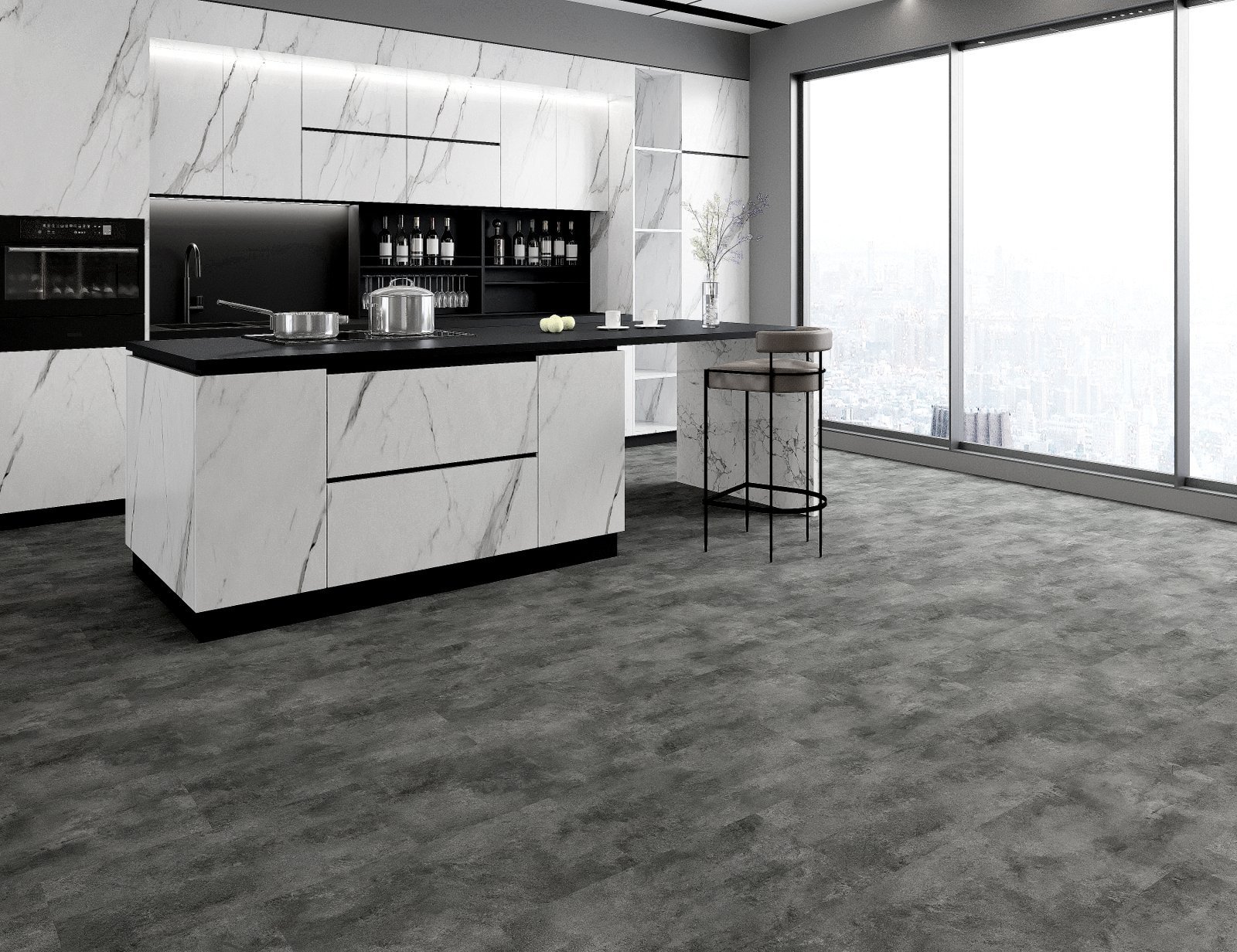
SPC flooring can resist everyday surface water, but a water-resistant plank does not make the installed room watertight. For Kermit SPC, remove spills promptly, use damp cleaning and follow the approved room and installation conditions. Bathroom floors, continuously wet areas, outdoor use and cleaning by hosing are not recommended.
This distinction matters when someone asks for “waterproof flooring.” A kitchen spill, moisture in a concrete base and a leaking dishwasher are different situations. The Kermit installation and care manual in English is the starting point for deciding whether the proposed use is appropriate.
The plank, its joints and the room are separate questions
The term SPC describes a rigid composite flooring construction. It does not establish a waterproofing specification for the whole building assembly. The floor includes joints, edges, penetrations, transitions and a base beneath the panels. Those details need their own assessment.
For example, a floor may look dry after a spill has been wiped up, while a separate leak has reached the space below it. Appearance alone cannot confirm the condition of the base. Do not use a water-resistance label to omit moisture checks before installation or to assume that a leak needs no further investigation.
Use this distinction when comparing products too. A stone-look finish is a design choice, not evidence of suitability for a shower room. The Stone Collection shows visual options; room approval still comes from the applicable product instructions.
Match the response to the source of water
| Situation | What to do for a Kermit floor |
|---|---|
| A drink or cooking spill | Remove the liquid promptly and clean any residue using the approved care method. |
| Routine cleaning | Use a damp cloth or mop with a suitable mild cleaner; do not leave standing water. |
| Damp footwear at an entrance | Plan effective dirt and moisture control, then remove tracked-in water. Avoid rubber or latex-backed mats that may stain. |
| Moisture in the base | Identify and resolve the substrate issue before installation; record the appropriate moisture check. |
| Appliance or plumbing leak | Stop the source safely, remove surface water and arrange assessment of the affected floor and base. |
| A continuously wet or hose-cleaned room | Choose a flooring system approved for those conditions; this is outside Kermit’s recommended use. |
A manufacturer-specific cleaning instruction is more useful than a universal claim that all SPC can be left wet for a particular number of hours. Kermit’s care guidance does not provide a standing-water allowance to use as a cleaning target.
Kitchens and entrances are different from bathroom floors
Kitchens, entrances and other suitable temperature-controlled interiors can be considered when their normal use is compatible with Kermit's instructions. The plan still needs to account for appliances, furniture, cleaning routines and transitions to adjoining finishes.
A bathroom is not made suitable simply by placing SPC away from the shower tray. Kermit's manual does not recommend bathroom floors, as well as pools, saunas, outdoor installations and areas with continuous wetting. Keep flooring approval separate from any wall-panel specification in the same project.
Ask how the room will actually be maintained. A commercial space that looks like an ordinary indoor room may be unsuitable if staff wash it down with a hose. If the proposed use is unclear, send the room details and selected product to the supplier before purchase. The room-suitability guide covers the wider selection process.
Damp cleaning means controlling the amount of water
Remove loose dirt first so the mop does not drag grit across the surface. Use a well-controlled damp cloth or mop and a suitable mild cleaner. Wipe up remaining liquid rather than letting puddles dry on the floor. Do not hose the surface or treat water resistance as permission for a soaking-wet cleaning routine.
For a persistent mark, identify the substance and ask about an appropriate method before trying a stronger chemical, abrasive treatment or steam equipment. A cleaning product's general claim to suit “hard floors” is not confirmation for the selected flooring. Keep the approved method available to cleaning staff and future occupants; the care and repair guide includes a practical handover record.
Check the base before panels cover it
Kermit's manual requires a firm, clean, dry and suitably flat base. Moisture testing must match the substrate and the acceptance criteria that apply to the project. Record the method, location, result and decision before fitting. Do not choose a single moisture percentage from an unrelated floor or substrate.
Ground-contact concrete or stone requires effective damp-proof protection under the manual's conditions. An attached backing or a separate comfort underlay does not, by its name alone, establish that moisture protection has been provided. The installer needs to identify each layer's function and confirm compatibility.
An unresolved damp base is a preparation issue even when the chosen plank is water-resistant. Use the installation planning guide to settle responsibilities, checks and the selected locking-system instructions before work starts.
Preserve the floor's required movement
Kermit is installed as a floating floor under the applicable instructions, with at least 10 mm clearance at walls and fixed objects. Required movement space must remain effective at pipes, door details and other restrictions. Do not pin the floor with fitted cabinetry or fix skirting through it.
Trying to stop water by filling every movement gap or bonding the perimeter can conflict with those installation requirements. Any proposed edge detail needs approval for the actual system. It cannot turn an excluded bathroom or continuously wet space into an approved application.
What if a leak reaches an installed floor?
Once it is safe to do so, address the source and remove accessible surface water. Document the affected area, product identification and what happened. Have the installer or an appropriate building professional assess whether water has reached the underlay or substrate and what access is needed.
Do not assume that a dry-looking surface proves the entire assembly has dried, or that every panel must automatically be replaced. The repair decision depends on the observed condition and the approved method for the installed system. Obtain the applicable warranty terms for the order; water resistance alone does not establish leak coverage or a guaranteed repair outcome.
When comparing another material, ask the same questions about exposure, cleaning, installation and warranty scope. The SPC-versus-laminate comparison helps keep the choice product-specific.
Water-resistance questions
Can I leave cleaning water on Kermit SPC flooring?
Kermit's guidance calls for damp cleaning and no standing water. Remove remaining liquid; do not treat a water-resistance claim as an approved soaking time.
Can Kermit SPC be installed on a bathroom floor?
Kermit's installation manual does not recommend bathroom floors. It also excludes continuously wet areas, outdoor use and cleaning by hosing from the recommended applications.
Does SPC replace a moisture check or damp-proof protection?
No. The base must satisfy the installation requirements. Testing and moisture protection need to suit the substrate and project; the plank's water resistance does not replace them.
Does a water leak mean the entire floor must be replaced?
That cannot be decided from the material name alone. Have the floor, underlay and base assessed, then agree the appropriate repair or replacement scope for the actual damage and installation.