
February 07, 2026

Yasin Bayram
Construction Expert with 30 years of experience
SPC Flooring vs Laminate: Compare the Floor, Room and Installation
Compare SPC flooring and laminate by construction, water exposure, wear, heating, installation and total project scope before choosing a specific product.
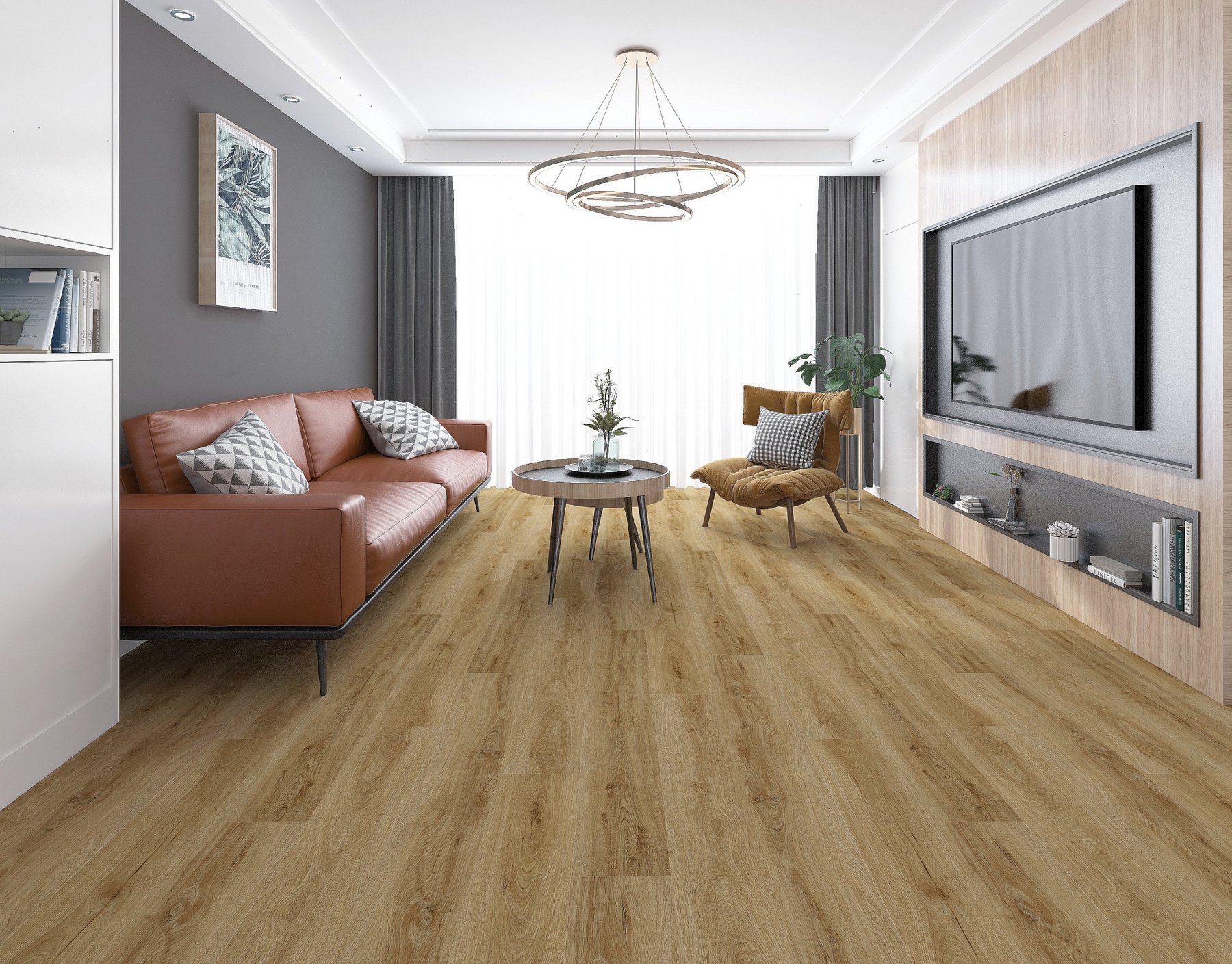
SPC flooring and laminate can both suit an interior project, but the right choice depends on the particular products and the room. Compare their construction, approved use, preparation requirements and care instructions. A wood-look surface, an overall thickness or a broad “durable” claim is not enough to rank one above the other.
For Kermit SPC, use the applicable product sheet with the English installation and care manual. For the laminate option, obtain the same information from its manufacturer. This makes the comparison useful to the homeowner, specifier and installer working on the same space.
What is the material difference?
Kermit's SPC flooring uses a rigid stone-polymer composite core. Its documented 6 mm no-IXPE configuration, for example, has a decorative film and a 0.50 mm wear layer above the core. Those details describe that configuration, not every possible order.
Laminate usually has a wood-based core with a decorative surface. The EPLF laminate installation bulletin explains that its wood-based core responds to moisture and heat. This helps explain why product-specific moisture and movement instructions matter; it does not determine the performance of every laminate on the market.
The printed design can make either product resemble timber or stone. Choose the appearance using identified physical samples, and compare technical suitability separately. If a quotation also mentions LVT or WPC, the vinyl terminology guide explains how those labels relate to SPC.
Compare both proposals against one room brief
| Decision | Information needed for both options |
|---|---|
| Intended use | Named product and confirmation for the room, traffic and furniture loads |
| Water exposure | Permitted cleaning, spill conditions, exclusions and any relevant warranty terms |
| Surface performance | Declared wear and damage-resistance information, with the test or classification identified |
| Installation | Accepted base, moisture control, underlay, movement gaps and transitions |
| Heating and sound | Evidence and instructions for the proposed floor-and-underlay assembly |
| Project cost | The same area, preparation, accessories, labour and delivery scope |
A supplier who identifies a missing item is giving you something actionable. Leave it open in the comparison until it is resolved, rather than filling the gap with a general reputation for the material.
Water resistance: compare the actual instructions
For Kermit, water-resistant flooring remains subject to the installation manual's limits. Kitchens and other suitable indoor spaces can be considered, but bathroom floors, continuously wet spaces, outdoor use and cleaning by hosing are not recommended. Routine care is a damp cloth or mop with a suitable mild cleaner; do not leave standing water.
Laminate should not be treated as one uniform water-performance category. Manufacturers offer specific products with water-resistance claims, as illustrated by Quick-Step's laminate range. Check the selected model, its installation details and the applicable terms. That example does not extend its approval to other laminate products or to Kermit SPC.
For either proposal, separate a spill on the surface from an appliance leak, moisture in the base or a room that needs a waterproofing system. A resilient plank is not, by itself, evidence that the room below is protected. The SPC water-resistance guide works through these different situations.
Durability: ask what is being measured
A floor can face foot traffic, grit at an entrance, rolling chairs, furniture loads and occasional impacts. These are different demands. Ask which declared result addresses the use you expect, and compare like-for-like evidence.
For SPC, wear-layer thickness is a useful product field. It is not an overall score for every type of damage. Equally, a laminate surface rating is not a measurement of an SPC wear layer. Do not turn unlike labels into a numerical ranking. Keep the manufacturer's named test or classification beside the result.
Kermit's thickness and wear-layer guide separates total thickness, wear layer and backing. A 6 mm SPC plank and a thicker laminate plank have different constructions; the thickness difference alone does not prove which will perform better in your room.
Furniture protection also belongs in the comparison. Record desk chairs, heavy cupboards and appliance moves. Both the product selection and the way those loads are handled affect the practical maintenance plan.
Installation: include the work beneath the visible floor
Before comparing fitting quotations, have the base assessed. Kermit's manual calls for a flat, firm, clean and dry base, with flatness within 2 mm over 1 m and moisture acceptance appropriate to the substrate. It requires at least 10 mm clearance at walls and fixed objects for the floating floor. The selected locking system and room layout determine the remaining installation details.
Obtain the laminate manufacturer's own requirements rather than copying the Kermit numbers into its specification. Both quotations should say who will prepare and accept the base, which underlay is included, and how doors and adjoining finishes will be handled.
“Click installation” does not remove preparation, acclimatisation or movement planning. For the Kermit proposal, use the installation planning guide to record responsibilities before fitting begins. Do not promise a fixed installation time without the site conditions and work scope.
Heating, sound and everyday feel
Ask about the full proposed assembly, including any attached backing and separate underlay. Kermit's heating limit is 27°C at the finished floor surface, with a compatible system and the controls required by its guidance. Use the laminate supplier's corresponding limit and requirements for its product.
An acoustic value also needs an identified assembly. Kermit's documented 6 mm no-IXPE sheet leaves acoustic performance undeclared; a figure for a different backed product cannot fill that field. Compare the evidence relevant to the project rather than assuming that a material name guarantees a quieter room.
Walk on suitable samples or a representative installation when possible to judge your own preference for feel. Keep this observation separate from a laboratory sound result. The underlay and acoustics guide explains the evidence to request.
Care, repairs and the complete quotation
Kermit specifies damp cleaning and suitable furniture protection. EPLF's home-care guidance likewise describes controlled damp cleaning and manufacturer-recommended products for laminate. Check the particular floor before using steam equipment, a surface treatment or a repair compound.
For a future repair, ask how replacement material would be identified and what access the installed layout permits. Do not assume every panel can be removed individually or that a later batch will match exactly. Keep the product code, batch labels, installation record and applicable warranty terms.
Finally, compare quotations for the same finished result: measured area, agreed allowance, preparation, flooring, approved underlay, transitions, skirting, labour, delivery and any removal work. A lower plank price can only be assessed fairly once the rest of the scope is visible.
Choose the product that meets the room brief, has usable supporting documents and fits the complete project budget. Send the Kermit product reference and room details through contact if a specification point needs confirmation.
SPC and laminate questions
Is SPC always better than laminate?
No. Compare specific products for the actual room, installation, surface demands, maintenance and budget. A material name alone does not establish an overall winner.
Is all laminate unsuitable where spills may occur?
No. Some manufacturers offer water-resistant laminate products with specific installation and use conditions. Check the selected model and its terms rather than applying one claim to every laminate.
Does thicker flooring always last longer?
Overall thickness alone cannot establish service life. Compare the construction, declared performance, intended use and installation requirements of the two products.
Can I use the same underlay and heating settings for both?
Only if each manufacturer approves the exact assembly and conditions. Kermit's maximum heated floor-surface temperature is 27°C; do not assume another product has identical requirements.