
August 14, 2026

Yasin Bayram
Construction Expert with 30 years of experience
SPC Flooring Mistakes: 6 Common Misconceptions and What Actually Works
The most common SPC flooring mistakes explained from 30 years on job sites: expansion gaps, bathroom use, subfloor prep, cutting, outdoor limits, and commercial cleaning.

If you have been researching floor coverings for a home or commercial project, you have almost certainly come across SPC (Stone Plastic Composite) flooring. Known for its outstanding durability and waterproof construction, this innovative material is also, unfortunately, at the center of a few persistent misconceptions. "It's waterproof anyway" has become the excuse behind some genuinely bad installation practices — practices that lead to buckled floors, broken click joints, and mold smells a few months down the line.
I have spent 30 years on flooring job sites. In this article, I walk through the most common SPC flooring mistakes I encounter and what the reality actually looks like. The goal is not to criticize the material — quite the opposite. Installed by the rules, SPC is a lifetime floor, and I want you to get exactly that result.
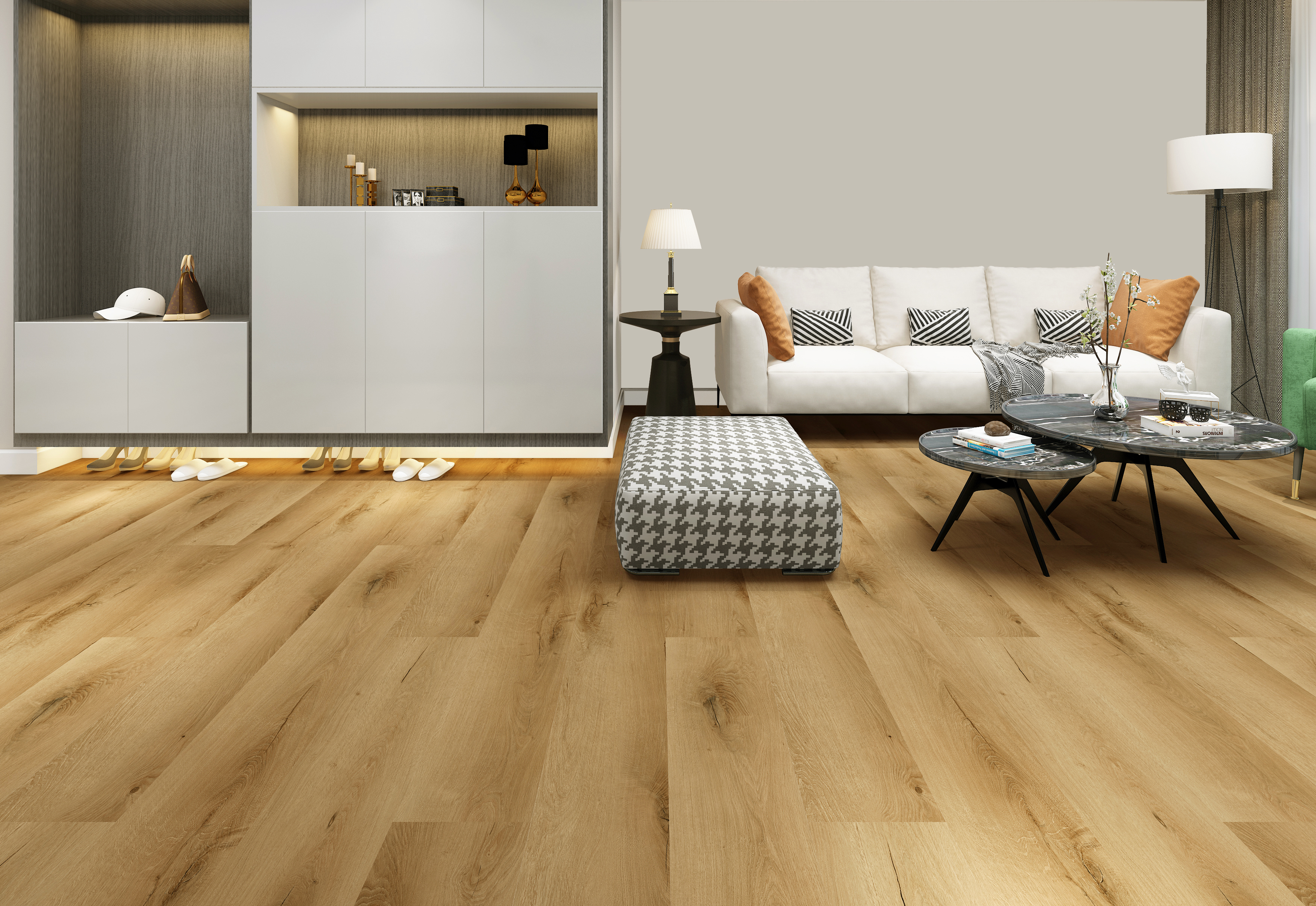
1. Misconception: "It's waterproof, so it can go tight against the wall."
This is one of the most expensive mistakes I see in the field.
The reality: No matter how water-resistant it is, SPC flooring is installed as a floating floor, like every click-lock system. The material expands and moves — microscopically, but measurably — with temperature changes. If you deny it room to move, it releases that energy in the only direction left: upward. The result is a floor that tents or buckles in the middle of the room within months, with joints under constant stress.
That is why leaving an expansion gap of at least 10 mm along every wall — and around door thresholds, columns, radiator pipes, and any fixed obstacle — is not optional. The gap disappears under skirting boards and profiles after installation, so there is no aesthetic cost.
Practical tip: place 10 mm spacers (wedges) between the planks and the wall during installation, and do not remove them until the floor is finished. On large areas and long corridors, plan intermediate expansion profiles as well.
2. Misconception: "It's waterproof, so it's perfect for bathroom floors."
There is a subtle but critical distinction here: the plank being waterproof and the floor being waterproof are not the same thing.
The reality: The SPC plank itself is genuinely unaffected by water — leave one submerged for days and it will not swell or deform. But in bathrooms, floors are typically cleaned by pouring water and washing down, not by wiping. In a floating click-lock floor, no matter how tight the joints are, heavy wash-down water will eventually find its way through the joints to the subfloor.
Water trapped under the floor has nowhere to go. It cannot evaporate or dry. Over time it creates the conditions for:
- mold and mildew growth
- persistent damp and musty odors
- bacterial buildup
- deterioration of the screed or substrate below
So the problem is never the plank — it is what collects beneath it. For wet rooms that are washed down directly, such as bathrooms and shower areas, grout-free solutions (SPC wall panels, ceramics) are the better specification. In kitchens, entryways, and corridors — spaces with spill risk but no wash-down routine — SPC flooring is precisely the right tool for the job.
3. Misconception: "Like laminate, it can go over any subfloor."
Laminate is a relatively forgiving material that tolerates minor imperfections underneath. SPC has the opposite character.
The reality: SPC flooring is far more sensitive to subfloor condition than traditional laminate. Because it is a stone-based, rigid board, every bump and slope underneath eventually telegraphs through to the surface. Worse, planks bridging over a hollow flex slightly with every footstep, and that repeated micro-movement ends in broken click joints. Once a joint breaks, the plank shifts, the seams open, and the floor's integrity is gone.
The subfloor for SPC must be flat, smooth, dry, and clean. The practical field rule: checked with a 2-meter straightedge, there should be no more than a few millimeters of gap beneath it. Where the existing floor cannot meet that standard, a self-leveling screed must be applied before installation.
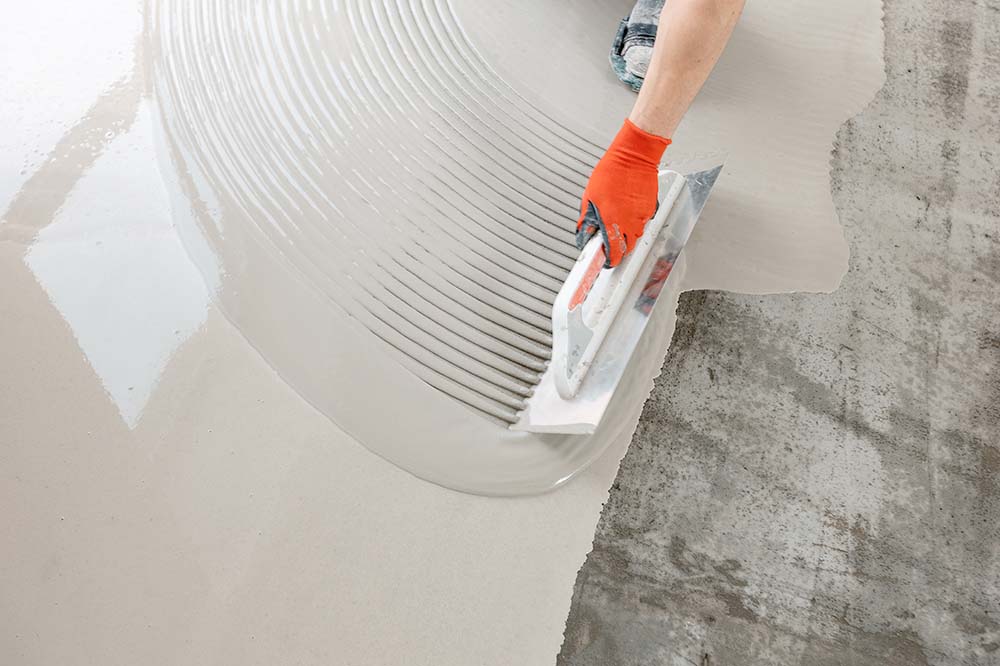
If you are installing over old ceramic tiles, the grout lines need to be leveled; over fresh screed, it must be fully cured and moisture-tested. Skipping subfloor preparation because "SPC is tough" is how you end up ripping the whole floor back out.
4. Misconception: "Installation is hard — you need a circular saw and serious craftsmanship."
This misconception usually comes from people who have never held the material. The truth is the opposite.
The reality: SPC installation is remarkably clean and practical. Thanks to its stone-powder composite core, there is no need for noisy, dust-blowing circular saws. A plank is scored with a sharp utility knife and then snapped cleanly, like glass. That one technique delivers three benefits at once:
- Dust-free installation: a major comfort upgrade in occupied homes and operating businesses.
- Quiet work: a real advantage in apartment buildings and offices.
- Speed: with the click system, an experienced crew covers serious square meters per day.
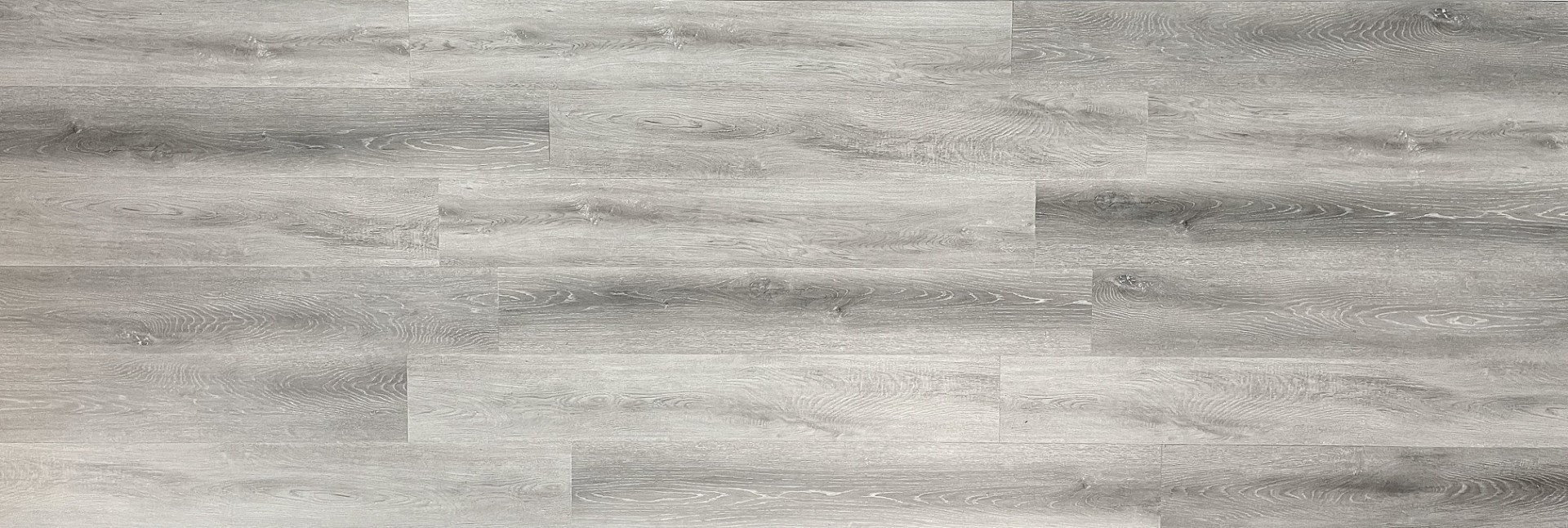
"Easy" does not mean "rule-free," of course. Joints must be engaged at the correct angle, the first row must start dead straight, and expansion gaps must be protected throughout. But with the right approach, SPC installs faster and far cleaner than laminate.
5. Misconception: "If water doesn't affect it, it works outdoors too."
Water resistance is not outdoor durability. The two are constantly confused.
The reality: Despite its high water resistance, SPC flooring is engineered for interior use only. Outdoors, the material faces far more than water:
- Direct sunlight (UV radiation): fades the decorative film and degrades the printed design layer.
- Freeze-thaw cycles: surfaces that freeze overnight and thaw by day fatigue the material structure.
- Extreme temperature swings: far greater expansion and contraction than anything a conditioned interior produces.
- Rain, snow, and open-air exposure: the click system and subfloor details are simply not designed for it.
Open terraces, balconies, and gardens are not SPC territory; look at outdoor-rated composite decking or frost-resistant ceramics for those projects. An enclosed, climate-controlled sunroom is a different story — SPC can work there, again with disciplined expansion gaps.
6. Misconception: "In cafes and restaurants, you can just hose it down."
SPC flooring is a frequent and justified choice for cafes, restaurants, offices, and retail thanks to its resistance to heavy foot traffic. But the bathroom rule from section 2 applies here in full.
The reality: Wet-mopping with buckets of poured water should not be the cleaning method for any SPC floor. Heavy water use pushes moisture through the joints and under the planks, and in commercial spaces the risk multiplies: traffic is intense, cleaning happens daily, and by the time a problem is noticed, a large area is usually affected.
The correct cleaning protocol is simple:
- Daily cleaning with a well-wrung damp mop or microfiber cloth.
- Spills wiped up promptly, not left to sit.
- pH-neutral cleaners instead of harsh or abrasive chemicals.
- Felt pads under chair and table legs, which noticeably extend surface life.
An SPC floor maintained this way keeps its day-one appearance in a commercial space for years.
A short checklist before you specify or install
Run through these questions before purchase or installation:
- Has the subfloor been checked with a straightedge — and self-leveling screed applied where needed?
- Is there a minimum 10 mm expansion gap along walls and around all fixed obstacles?
- Is the application area an interior space — not a wash-down wet room?
- Is the cleaning plan built around a damp mop rather than poured water?
- Is the right kit ready for cutting and fitting (utility knife, spacers, tapping block)?
If you can answer "yes" to all five, your SPC project is off to a healthy start.
Final takeaway
Most of the common SPC flooring mistakes trace back to a single root: reading "waterproof" as "works under any condition." The reality, in brief:
- SPC is water-resistant, but it is a floating floor — it needs its expansion gap.
- The plank is waterproof, but wash-down water can slip through the joints — no wet rooms.
- It is a rigid board — it demands a flat subfloor and forgives no bumps.
- It is an interior product — UV and frost will destroy it outdoors.
- It excels in commercial spaces — but it wants a damp mop, not a bucket.
Knowing the material's limits and respecting the installation rules is how you get full value from the investment. Installed correctly, SPC flooring is a lifetime, comfortable, and elegant surface for homes and commercial projects alike. To browse wood-look options, take a look at the SPC Parquet Natural Collection; for a broader comparison across collections, the technical documents under Resources are worth a read.